Rechercher dans ce blog

Tuesday, September 1, 2020

Want to sound like an Arizona wine expert? Here are 10 grape varietals you need to know - The Arizona Republic

It was a chardonnay from Napa’s Chateau Montelena that beat French wines in the historic 1976 “Judgment of Paris” competition, heroically portrayed in the 2008 movie Bottle Shock.

And all it took was a rant by Paul Giamatti’s disgruntled character in the 2004 wine road trip flick Sideways to cause merlot sales to plummet.

His passion for pinot noir, however, had the opposite effect.

When it comes to wines, those three are arguably the most popular and menu-friendly — the names even the most casual wine drinkers know and can pronounce.

However, there are many other high-profile varieties that grow right here and fuel a thriving Arizona wine industry.

Here's what to know about Arizona wine

More than 100 Arizona wineries rely on fruit from the three designated American Viticultural Areas of the Verde Valley, Sonoita and Willcox. Serving as the state’s three main wine regions, the vast majority of grapes are grown in the Sonoita and Willcox areas in the south and southeastern parts of the state.

WINERIES: These Arizona wineries are aging the next big thing

Arizona’s viticulture history dates back to 16th century Spanish Jesuit priests, who planted grapes to make wine for religious ceremonies. While it has evolved over the centuries, the Arizona wine industry has been commercially bubbling since the late 20th century and has picked up even more momentum over the last 15 years.

Sure, we lack the obvious verdancy of Napa, the Willamette Valley and the Columbia Valley. But there’s more than ideal temperatures, ample rainfall and central-casting soil when it comes to growing fruit and producing impressive wines. 

Old World wine regions near the Mediterranean – think Italy, Spain and southern France – share commonalities with the state’s wine regions. Hence, many of that region's varieties have found a solid home here including syrah, grenache and mourvedre, which hail from the Southern Rhone Valley, home to the Châteauneuf-du-Pape appellation.

“What thrives here are varieties that grow in regions with a similar climate to what we have. You can see it in the vines…when they’re in the climate they want to be grown in,” said Michael Pierce, director of viticulture and enology at the Southwest Wine Center at Yavapai College, and winemaker Bodega Pierce winery and Saeculum Cellars.

But Arizona's desert southwest terroir also brings elements that give a distinct Arizona edge to even classic and widely grown grapes.

“You have riesling from Arizona, but it may taste totally different from anything you’ve had from those grapes,” said Todd Bostock, winemaker for Dos Cabezas WineWorks.

Want to get into Arizona wine but need a point in the right direction? These are some good starts. 

Grenache/Garnacha

One of the most widely planted grapes in the world, it’s known for its bold dark fruit palate that typically results in a friendly medium-bodied red that doesn’t push too much tannin – the bitterness and dryness that can make you pucker or slightly clench your jaw when you sip and swallow – or acid. Sometimes, it may taste like a fruit roll-up with a hint of earthiness. It’s also known by its Spanish name, garnacha.

Syrah

Big and dark, this would be a more interesting substitute for a Cabernet Sauvignon at a steak dinner or great for sipping after dinner. It can run the gamut from dark berries and chocolate to tobacco or savory meat.

Mourvedre/monastrell

Full-bodied and meaty, this wine can share similarities with syrah but with a higher tannin. It’s often blended with grenache and syrah to create the popular trio known as "GSM." It’s also known by its Spanish name monastrell.

Tempranillo

This Spanish variety tends to be very food friendly with flavors that span cherry and leather with red fruit notes. Arizona-grown versions may boast a hint of sweet spice and tobacco.

Petite Sirah

No, it’s not the junior version of syrah. It’s is own variety that’s recognizable by its super deep red, almost purple, shade and full bodied notes of plum, chocolate and black pepper. Its high tannin makes it a popular blending grape with less hefty varieties but also a solid partner for rich dishes.

Sangiovese

The Italian variety is the primary grape used in making chianti. High tannin and acidity makes it a foil for dishes that boast rich tomato sauces, gooey cheese and vibrant herbs. It can be fruity or earthy.

Roussanne

This full-bodied southern France variety tends to surprise with its dry, stone fruit with a hint of butter palate. It’s often part of a blend but it’s not hard to find it bottled solo.

Chardonnay

It needs no introduction so just know that local winemakers tend to steer clear of the buttery super oaky styles of California and embrace a more delicate brighter rendition. Think citrus with hints of vanilla and creaminess. 

Viognier

Perfume-y and airy, this fun wine pushes peach, citrus and honeysuckle. It’s usually dry but don’t be surprised to come across off-dry interpretations that play off its fresh aromas.

Riesling

At first, it may strike some as odd that this German variety not only grows but also does well here for the few growers that take on the challenge. There are some sweet takes on it but for the most part it’s done dry or off-dry with stone fruit, pear and perhaps a hint of lemon. As it ages, petrol may become part of the package, but in a good way. Crisp, light and lacking in tannins, you’ll often see it listed as a go-to for spicy Asian dishes.

Support local journalism and subscribe to azcentral.com today.

Let's block ads! (Why?)


"Here" - Google News
September 01, 2020 at 10:00PM
https://ift.tt/32Og91M

Want to sound like an Arizona wine expert? Here are 10 grape varietals you need to know - The Arizona Republic
"Here" - Google News
https://ift.tt/39D7kKR
Shoes Man Tutorial
Pos News Update
Meme Update
Korean Entertainment News
Japan News Update

Milkhouse Café donates over $16,000 in tips to Port Huron nonprofit Mid City Nutrition - The Times Herald

takanadalagi.blogspot.com

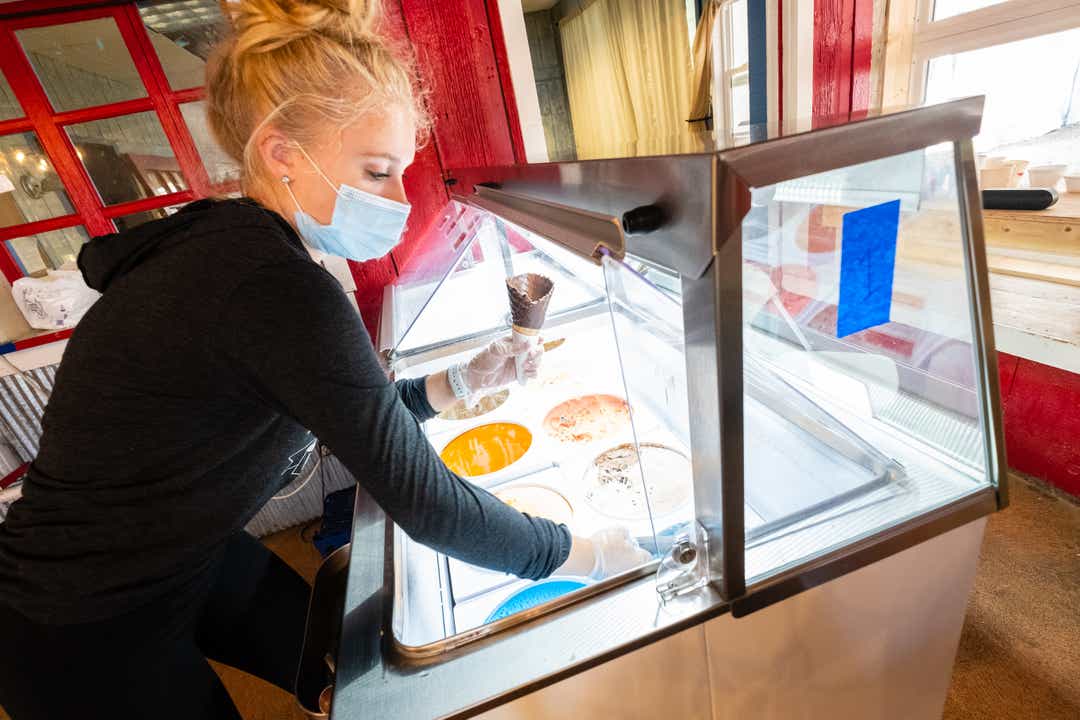
Alice Rieves was expecting a $3,000, maybe $4,000 donation in tips from Milkhouse Café. 

So Rieves, Mid City Nutrition’s executive director, was a little surprised when the Fort Gratiot café donated more than $16,000 to the Port Huron nonprofit. 

“I was in tears,” she said, and “that’s not chump change.” 

Milkhouse Café, located at 4189 Keewahdin Road, has been choosing a local organization to donate 100 percent of its tips to. 

For August, all tips collected were given to the St. Clair County Sheriff Dive Team and from the second half of May to the end of July all tips collected were given to Mid City Nutrition, said Milkhouse Café Manager Jeff Pemberton. 

Read More:

  • Fort Gratiot ALDI temporarily closed for remodel
  • Huron Food Fleet looking for new home
  • Eastern Michigan Bank buys Parfet Office Building in downtown Port Huron
  • Demand for food relief stays strong amid COVID-19 pandemic

“Our customers are incredibly generous,” he said, and when they know the tip is going toward a charity or nonprofit they might ask to add an additional $5. 

The first two weeks of raising money for the nonprofit were the most shocking, with the cafe making close to $4,000 in tips.

“We knew it was adding up,” Pemberton said. 

There is a long list of requests for who to support at the cafe and Mid City Nutrition was chosen because it is in need and seeing greater numbers of people who need help during the pandemic, Pemberton said.

Rieves said the nonprofit has had over a 20 percent increase in people using its services, “and I don’t see the need going away.” 

The Milkhouse Café donation was put into the nonprofit’s new building fund at 830 Griswold St., with an estimated cost of over $1 million and with about $450,000 raised as of April.

Rieves said the building project is progressing and the nonprofit had hoped for a spring groundbreaking, but nobody was expecting the pandemic and it's behind a few months. 

The nonprofit is anxiously anticipating a fall groundbreaking, she said. 

“I am often overwhelmed by the generosity from this community, you are the best!,” Rieves said in a written message on Facebook. “We at the ‘Soup Kitchen’ could not continue our mission ‘To serve the hungry and underprivileged as long as there is a need’ without your generous support and confidence.” 

Pemberton, who is on Mid City Nutrition’s board and is a Port Huron City Council member, said someone might not go to the soup kitchen to support it unless they are actively involved in it. 

Donating money through tips is an easy way to support an organization and the cafe looks at it as creating an opportunity for the customers to be generous. 

“And they’re the ones the that deliver every time,” Pemberton said. 

Milkhouse Café is open 2 to 9 p.m. Sunday through Thursday and 2 to 10 p.m. Friday and Saturday. After Labor Day the café is planning to switch to winter hours, which might be adjusted depending how things progress with the pandemic. 

More information can be found on the Milkhouse Café’s Facebook page and website. 

Contact Bryce Airgood at (810) 989-6202 or bairgood@gannett.com. Follow her on Twitter @bairgood123.

Let's block ads! (Why?)


"cafe" - Google News
September 01, 2020 at 10:56PM
https://ift.tt/3lFFG6c

Milkhouse Café donates over $16,000 in tips to Port Huron nonprofit Mid City Nutrition - The Times Herald
"cafe" - Google News
https://ift.tt/2FkbMR3
https://ift.tt/3c4yPxW

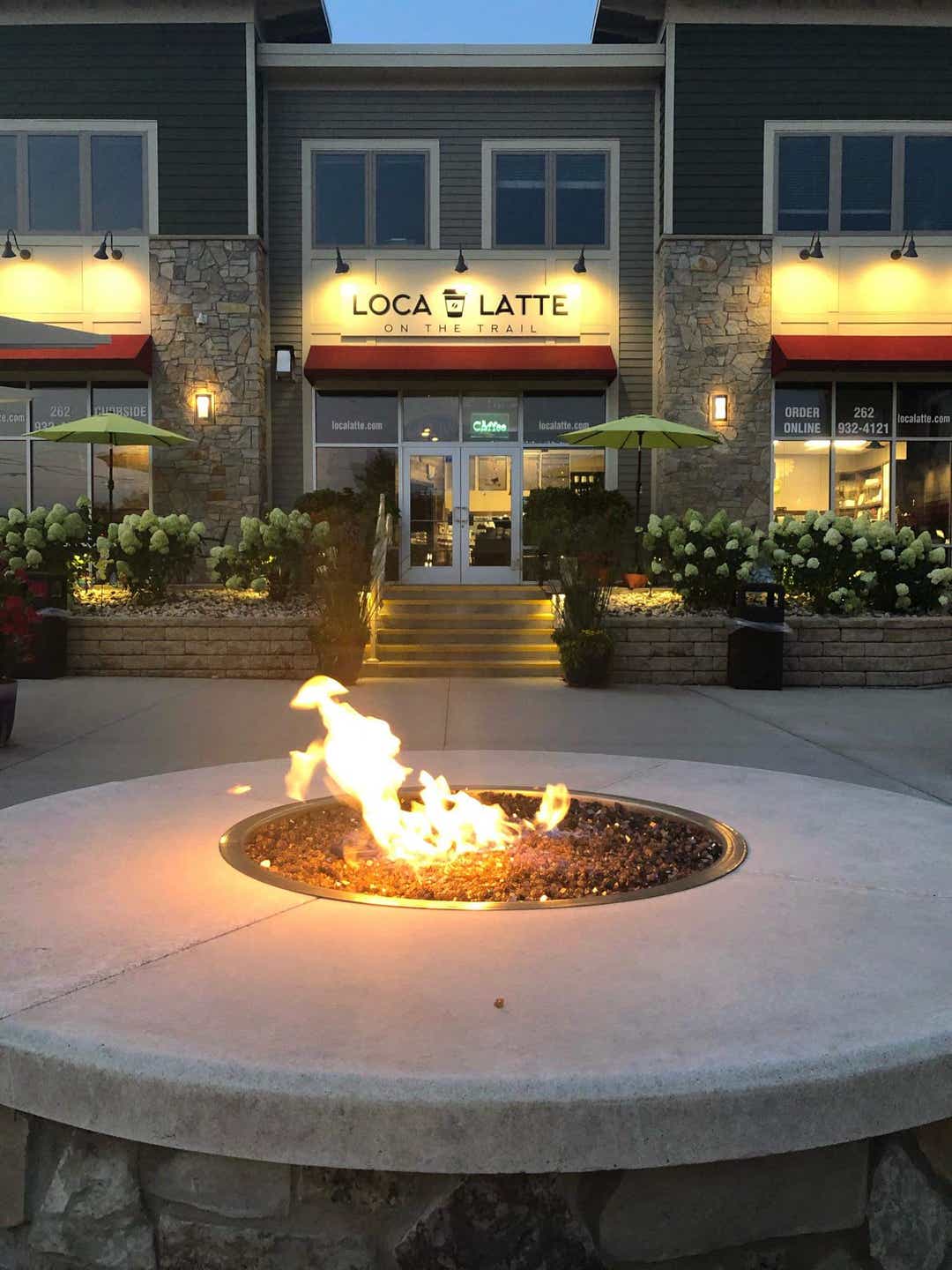
From tiramisu to pistachio, Loca Latte in Sussex features more than 50 flavors for coffee drinks, and fresh foods - Milwaukee Journal Sentinel

takanadalagi.blogspot.com

Is it really that crazy to offer more than 50 flavors for a coffee drink?

The owners of Sussex's Loca Latte — Serena Masche and Kartal Mercanli — seem to think so.

They selected that name for their coffee shop and eatery because "loca" means crazy (in Spanish), said Mercanli.

Mercanli said they offer some unusual flavors such as tiramisu and pistachio.

"Both have been very popular. We carry the seasonal flavors year-round. We always had a lot, but (we) added many more," said Mercanli.

Loca Latte was formerly Cafe De Arts. 

Cafe De Arts, which started in Waukesha in 2008, had a franchising agreement with Sussex to open a second location in November 2018 at N63 W23217 Main St.

But Cafe De Arts announced on its business Facebook page that as of Aug. 18 its  franchising lease had ended with Sussex, and it wanted to go in a different direction. 

And according to Loca Latte's Facebook page, the owners wanted to "take a new path and move forward independently as Loca Latte."

Cafe De Arts will retain its only location at 830 W. St. Paul Ave., Waukesha.

Masche and Mercanli said Loca Latte will have the same owners but will have a new name, a new menu, new bakery items and new artwork.

"You will see the usual faces you see serving you with fresh, healthy, organic and locally sourced products," Mercanli said.

"We have personally blended our own espresso mix specifically for our cafe. All the coffee is deliciously smooth and flavorful from a European roaster out of Madison," Mercanli added.

Welcoming people to Sussex

Masche and Mercanli said they will cater to bikers, walkers and hikers along the Bugline Trail, as well as people driving through Sussex. 

The eatery serves as a rest stop along the Bugline Trail, a 15.6-mile trail from Menomonee Falls to Merton. 

"Many travelers are on the trail from many different towns around us. I feel like we are bringing people even closer and creating more friendships between people," said Mercanli. 

She said that many of the shop's regulars are from Menomonee Falls, Merton, Pewaukee and Brookfield.

"We try to hold ... community offerings for them. We do have painting classes, art classes, yoga classes as much as weather permits. We want people feeling comfortable and coming to hang out with us, regardless of purchase or not," said Mercanli.

She added that the shop is pet friendly, and all dogs will get a free treat.

"We look forward to continuing to serve the community. We truly have the best customers, and therefore want to give them the best," said Mercanli. "We are passionate and dedicated to offering the community a great spot to hang out at."

Cathy Kozlowicz can be reached at 262-361-9132 or cathy.kozlowicz@jrn.com. Follow her on Twitter at @KozlowiczCathy.

Let's block ads! (Why?)


"cafe" - Google News
September 01, 2020 at 09:07PM
https://ift.tt/3lLA9ev

From tiramisu to pistachio, Loca Latte in Sussex features more than 50 flavors for coffee drinks, and fresh foods - Milwaukee Journal Sentinel
"cafe" - Google News
https://ift.tt/2FkbMR3
https://ift.tt/3c4yPxW

Here To Serve Enters Electric Vehicle Supply Chain - PRNewswire

WHITE PLAINS, N.Y., Sept. 1, 2020 /PRNewswire/ -- Here To Serve Holding Corp. (OTC:HTSC) is pleased to announce that its wholly owned subsidiary, Fortune Nickel and Gold Inc. ("Fortune"), has signed an agreement to purchase mining claims in the Canadian nickel-rich area near Timmins.

According to Paul Riss, CEO of HTSC, "We have been working with experts in Canada and we have been impressed with the significant nickel finds in the rock formations in northeastern Ontario.  Our claims are 10 miles from what people are saying is one of the largest nickel sulfide mines in the world.  Our Fortune subsidiary has been established to take advantage of these minerals, and previous drilling in the claims that we are purchasing shows a high level of nickel as well as gold."

"In today's world, we are concerned about inflation and we want this diversification to protect our company and create value for our shareholders," continued Riss.  "We believe we have secured a mineral-rich environment and we are especially bullish on nickel and the projected use of nickel in electric vehicles.  We plan a very strategic entrance into the electric vehicle supply chain."

About Here To Serve Holding Corp.

Here to Serve Holding Corp. operates as four entities: Fortune Nickel and Gold Inc., Novus Ordo Industries Inc. ("Novus"), ICF Industries Inc. ("ICF") and Executive Industries, which operates as a division of ICF.

Fortune intends to become a player in the exploration and production of nickel, gold and other precious metals internationally. The company is focused primarily on nickel exploration as the battery metals are projected to explode in the coming years along with the electric vehicle ("EV") market. The company's core mission is to supply the major nickel contracts awarded by the largest EV manufacturer in the world. 

Novus is a California-based licensed construction company. Working with strategic partners, Novus provides its clients with architectural, engineering, and construction services for the custom building of residential homes, commercial properties, hotels and cannabis facilities using insulated concrete forms.

ICF is a distribution, consulting and sales corporation designed to supply construction material throughout North America. ICF has contracts to distribute a diverse array of industrial products such as stuccoes, plasters, insulated concrete forms, Gigahomes, modular homes and greenhouses and medical supplies from strategically designated vendors.

Executive Industries offers corporate advisory, consulting and marketing services to both public and privately-owned companies. Executive Industries helps entities with corporate strategy, negotiation, corporate structure, marketing and executive management decisions.

Please visit https://heretoserve.tech/.

The information contained herein includes forward-looking statements. These statements relate to future events or to our future financial performance, and involve known and unknown risks, uncertainties and other factors that may cause our actual results, levels of activity, performance, or achievements to be materially different from any future results, levels of activity, performance or achievements expressed or implied by these forward-looking statements.  You should not place undue reliance on forward-looking statements since they involve known and unknown risks, uncertainties and other factors which are, in some cases, beyond our control and which could, and likely will, materially affect actual results, levels of activity, performance or achievements.  Any forward-looking statement reflects our current views with respect to future events and is subject to these and other risks, uncertainties and assumptions relating to our operations, results of operations, growth strategy and liquidity.  We assume no obligation to publicly update or revise these forward-looking statements for any reason, or to update the reasons actual results could differ materially from those anticipated in these forward-looking statements, even if new information becomes available in the future.

SOURCE Here to Serve Holding Corp.

Related Links

https://heretoserve.tech

Let's block ads! (Why?)


"Here" - Google News
September 01, 2020 at 08:00PM
https://ift.tt/32K2j0z

Here To Serve Enters Electric Vehicle Supply Chain - PRNewswire
"Here" - Google News
https://ift.tt/39D7kKR
Shoes Man Tutorial
Pos News Update
Meme Update
Korean Entertainment News
Japan News Update

Here's What California Lawmakers Did On Their Last Day Of Session - Capital Public Radio News

The end of California’s legislative session was beleaguered by COVID-19, wildfires, a tanked economy and a looming eviction crisis. Tempers also flared Monday night, forcing multiple breaks from debate as Senate Republicans — already quarantined and forced to vote remotely over Zoom — complained they were being silenced by the Democratic supermajority. 

Motivated by a pile of bills to push through and slow-moving deliberation, Senate Majority Leader Bob Hertzberg motioned to limit debate to two speakers per bill, who would be allowed to speak for two minutes each. 

Republicans objected — “This is bullshit,” Sen. Melissa Melendez was heard saying over a hot mic — but were overruled. 

After a dinner break, GOP lawmakers found they were not allowed to unmute their Zoom microphones without permission.

“The Democrats in the California state Capitol have banned us from the building and now they have banned us from participating in debate,” Republican Senate Leader Shannon Grove said in a Facebook live. “The Democrats have completely locked us out.” 

After nearly 90 minutes, leaders from both parties agreed to a “reset” and withdrew motions limiting debate. However, things got tense again near the end of the night: The Senate attempted to pass a bill as the clock struck midnight, and Republicans raised constitutional concerns. 

This night’s showdowns came after nearly all GOP senators were forced to participate and vote remotely, due to Republican state Sen. Brian Jones testing positive for the coronavirus last week. Jones had attended a floor session and an in-person Republican caucus lunch, exposing all his party colleagues, except Sen. Jim Nielsen, who for nearly a week has been the only Republican on the Senate floor. 

In another apparent first, Asm. Buffy Wicks was debating bills while holding her new baby. Assembly leaders had paved the way for proxy voting after members and staff tested positive for the coronavirus earlier this summer, but a Wicks aide said the Assemblywoman was denied permission to participate remotely. 

Still, each chamber worked through roughly 100 bills on their final day, before adjourning after midnight. The Senate kept passing bills until shortly after 1 a.m.

The following is a look at some of the bills lawmakers sent to Gov. Gavin Newsom, and others that didn’t: 

Eviction Relief

Lawmakers passed and Newsom signed AB 3088 — one of the most closely watched bills during the session’s homestretch — extending a halt to evictions for unpaid rent as a result of the COVID-19 pandemic.

In a statement late Monday, Newsom said the bill was a “bridge” and called on the federal government to step in to help stabilize housing markets. 

We need a real, federal commitment of significant new funding to assist struggling tenants and homeowners in California and across the nation,” he said.

The state’s eviction moratorium was set to expire this week if lawmakers didn’t take action.

Newsom and legislative leaders announced a deal on AB 3088 late last week. It pauses evictions through January 31 as a result of unpaid rent during the first six months of the pandemic. To be eligible for the protections, renters would have to fill out documents certifying they were impacted by COVID-19. Tenants would also have to pay at least 25 percent of their rent starting in September. 

The bill, however, does not forgive any missed rent payments. Landlords could recoup any unpaid sums in small claims court starting in March.

Evictions not related to unpaid rent — for example, as a result of nuisance complaints or the owner remodeling, for example — could restart when the current eviction moratorium ends September 2. The legislation would also offer some foreclosure protections for small landlords.

Democratic Asm. David Chiu, who carried the bill, acknowledged that the proposal is a short-term fix that will have to be revisited in the new year — a sentiment reiterated by other lawmakers who spoke on the legislation. 

"This bill is an imperfect but necessary solution to an enormous crisis,” he said while speaking on the floor.

Police Reform 

Despite a strong push for an array of police reform bills, some sweeping proposals sought by advocates (and celebrities) stalled on the final night of the session as the clock ran out. 

Lawmakers did not debate SB 731, which would have created a process to strip the badges from officers convicted of certain crimes or hit with misconduct charges. California is one of only a handful of states without such a process. 

Time also ran out for SB 776, which would have made more complaints of police violence subject to open records laws and require those complaints, which are currently retained for five years, to be retained indefinitely.

Both bills were targeted by three of the state’s largest law enforcement groups last week, which sent a joint letter calling for more time and vetting for the proposals. “Unfortunately, these two proposed bills were crafted virtually overnight and in silos — and would have unknown impacts to public safety, some of which could place both officers and members of the public in real danger,” the statement read.

Another bill, AB 66, which would have banned rubber bullets, tear gas, and other “less-lethal” crowd control tactics on protestors, also failed when time ran out.

But lawmakers approved other, more moderate reforms aimed at stepping up oversight and accountability in police departments.

AB 1506 would require state-led investigation into police shootings of unarmed civilians and would allow local governments to request an investigation into other killings. Democratic Asm. Kevin McCarty has been pushing the bill for years, even before Stephon Clark was shot and killed by police in his grandparents’ Sacramento backyard in 2018.

“We’ve seen too many families grieving senseless killings of African Americans and people of color by law enforcement and this must stop,” said Democratic Senate sponsor Bill Dodd.

Both chambers also approved a wholesale ban on police use of the carotid and other chokeholds through AB 1196.  

AB 1185 would allow counties to implement sheriff’s review boards or an inspector general to oversee the department and launch investigations, legislation that directly responds to tensions in Sacramento County between the sheriff and the inspector general. 

Another measure sent to Newsom, AB 1299, would make it more difficult for police departments to hire officers with marks on their records. 

Other COVID-19 Bills

Hospitals, nursing homes and other medical practices are required to keep a stockpile of personal protective equipment for their employees under SB 275. The measure comes after complaints poured in from hospital workers who said their employers did not provide adequate PPE in the early months of the pandemic. 

The Senate kept working after midnight to pass certain bills that didn’t fall under the Aug. 31 deadline, including SB 1447, which extends tax credits up to $100,000 for small businesses who hire new workers. Sponsor Sen. Steven Bradford said it was aimed at businesses — largely minority-owned establishments — that did not receive federal Paycheck Protection Program loans.

AB 5 Update 

Under AB 2257, musicians, journalists, real estate appraisers and a slew of other professionals would get exemptions from AB 5, a law signed last year that required the reclassification of many contractors to employees. 

As employees, those workers would get workplace benefits, like health insurance, and protections, like workers’ compensation. But some groups of professionals objected, claiming they lost work because employers did not want to bring them on as employees. 

The passage of the bill caps off a long, and at time contentious, series of negotiations over who should get a carve-out from the law, and what that would look like.

Flavored Tobacco Ban 

Despite intense lobbying from the tobacco industry, California now has one of the strictest laws on flavored tobacco products.

SB 793 was inspired by widespread reports of lung injuries linked to e-cigarettes and vaping that began to surface in 2019. It bans all flavored vape cartridges and other tobacco products including menthol cigarettes — only providing exemptions for hookah products and premium cigars. 

Newsom signed the bill Friday, hours after it was approved by the Senate. But by Monday night, a referendum had already been filed over the bill.

Other Misc. Bills

AB 1876 would extend a tax credit for lower-income earners to all undocumented immigrants. In June, Gov. Gavin Newsom signed a bill to extend the Earned Income Tax Credit, worth hundreds of dollars for eligible families, to undocumented immigrants with children under 6. Now he’ll have to decide whether to extend it to all undocumnted immigrants who meet the income requirements. The California Budget and Policy Center estimates 500,000 to 700,000 people could benefit from the expanded tax credit. 

As firefighters work to contain massive and fast-burning wildfires without the help of inmate ground crews sick with coronavirus, lawmakers approved AB 2147. The measure will allow nonviolent offenders who volunteer for the firefighting crews to have their records expunged.

Let's block ads! (Why?)


"Here" - Google News
September 01, 2020 at 04:07PM
https://ift.tt/2YTzbTy

Here's What California Lawmakers Did On Their Last Day Of Session - Capital Public Radio News
"Here" - Google News
https://ift.tt/39D7kKR
Shoes Man Tutorial
Pos News Update
Meme Update
Korean Entertainment News
Japan News Update

Here's how the pandemic has upended the financial lives of average Americans: CNBC + Acorns survey - CNBC

Tang Ming Tung | DigitalVision | Getty Images

From jobs to savings to retirement plans, the coronavirus pandemic has upended many Americans' financial lives.

While millions are still unemployed and many have seen their emergency savings run dry, it isn't all necessarily negative. Many are saving more and spending less.

In fact of those surveyed in a new CNBC + Acorns Invest in You survey, 46% said they are "more of a saver now" compared to before the pandemic.

Additionally, 60% consider themselves "savers," up from 54% last year. The poll, conducted by SurveyMonkey Aug. 13-20, surveyed 5,401 U.S. adults and has a margin of error of +/-2%.

About half, or 49%, said their monthly spending has decreased, compared to 33% last year.

Some of those savings can be attributed to the fact that people stayed home and didn't do things like dining out, said personal finance expert Jean Chatzky, co-founder of HerMoney.

"We learned how to go to the grocery store not every day, but once a week, which meant meal planning and shopping with a list and those are fabulous money-saving skills," she said. "We learned which of our subscription services we actually watch and which ones we don't."

Winnie Sun, managing director of Sun Group Wealth Partners in Irvine, California, said she has clients who are spending less money. That, in turn, has them feeling a sense of urgency. Her firm's client meeting schedule is up substantially since the pandemic began.

"We have seen an uptick in an interest in investing," said Sun, a member of the CNBC Financial Advisor Council. "They are seeing their checking accounts getting larger and they think that money is not earning enough for them."

Millennial Stacey Kelly is one of those savers. The Los Angeles-based content producer has managed to save about $800 to $1,000 every month since the pandemic began.

"I didn't realize how much money, especially in L.A., that I was spending on food and on my hair," she said. "Once the pandemic hit, I had to start cooking for myself and doing my hair myself."

As an African-American, Kelly said her hair is a big part of her identity. So she went to the salon every week for a wash and blow dry. She also used to eat out often, go shopping and buy Starbucks coffee. While she managed to save money by having a set amount automatically transferred into a savings account, she was dipping into it every month for living expenses.

"I have all these buckets for savings," Kelly said. "It just feels good because I can actually put money in it now."

Stacey Kelly has increased her savings during the coronavirus pandemic
Source: Stacey Kelly

People have also cut back on spending because of concern over the economy, the survey found.

Of those who said they cut spending, 53% said worry about the current economic situation was the reason they cut spending, and 26% said it was because of a loss or decrease in a source of household income. Additionally, 16% feared another stock market downturn and 14% lost their jobs.

The pandemic has also caused Americans to postpone spending money on a vacation (54%), remodeling or renovating their home (15%) or buying a car (14%), the survey found.

Those who had an increase in spending cited the cost of essential items going up (51%) and shopping due to boredom (24%) as the top reasons.

Tapping into emergency savings

Some Americans turned to their rainy day funds for much-needed cash. 

Since the pandemic began, 14% of Americans wiped out their emergency savings. That would amount to as many as 46 million people.

Others took measures like borrowing money to cover everyday expenses (11%), stopping contributions to their 401(k) plan or other retirement accounts (6%), or asking for rent relief or a delay (5%). Only 4% took an early withdrawal from their 401(k) and 3% borrowed from their 401(k).

More from Invest in You:
Are you prepared? This is the financial first-aid kit you need to stock
5 crucial financial lessons for kids of all ages
Working women are in the 'bull's-eye' of the recession. Here's how to cope

While Sun believes a second stimulus package "needs to come sooner rather than later," those in dire financial straits should also look to find ways to bring in income.

"Liquidate the things you don't need in your house," Sun said.

"Focus on the top three: shelter, food and medication," she added."Everything else has to go on the back burner."

Uncertainty over retirement

When it comes to saving for retirement, most Americans (67%) said pandemic didn't disrupt their plans and 19% are not sure how the crisis will impact their retirement.

However, there is greater uncertainty among those who work part-time or are unemployed. Almost a quarter, or 23%, of part-time workers and 32% unemployed people looking for work said they are unsure of the impact.

Of those who are unemployed and looking for work, 15% are actively making plans to delay their retirement.

Saving for children

Many Americans also don't have money put aside for their children. 

A majority, 53%, said they don't have savings such as bonds, cash, 529 college savings accounts or regular savings accounts for their kids. 

Almost one-third, or 32%, said they have a savings account and 13% have a 529 plan. Meanwhile, 8% have savings bonds, cash or certificates of deposit (CDs) and 7% have an individual retirement account or Roth IRA set up for their children.

One big issue parents face when saving for their children is overthinking it, Sun said. 

"Don't be so hard on yourself," she said. 

Parents can start at just $10 a month being automatically pulled out of their checking account into a savings account. Once it grows bigger, then decide what to do with it, like putting into a 529 plan, she advised.

"Just start and everything else will fall into place," Sun said.

SIGN UP: Money 101 is an 8-week learning course to financial freedom, delivered weekly to your inbox.

Disclosure: NBCUniversal and Comcast Ventures are investors in Acorns.

Let's block ads! (Why?)


"Here" - Google News
September 01, 2020 at 05:00PM
https://ift.tt/2QI0QCn

Here's how the pandemic has upended the financial lives of average Americans: CNBC + Acorns survey - CNBC
"Here" - Google News
https://ift.tt/39D7kKR
Shoes Man Tutorial
Pos News Update
Meme Update
Korean Entertainment News
Japan News Update

Pay-What-You-Can Cafe in Reading Welcomes All to Community Table - bctv.org

takanadalagi.blogspot.com
Pay-What-You-Can Cafe in Reading Welcomes All to Community Table | BCTV Skip to Content
/ Articles / Community /

Photography by Susan L. Angstadt

Sep 01, 2020

In celebration of National Everybody Eats Week, the Thursday, August 27th menu at Cafe Esperanza featured Creamy Lemon Artichoke Penne with Chicken, accompanied by bread, a beautiful fresh salad full of veggies from local farmers and victory gardens and lovely desserts.

Price: Pay What You Can.

The cafe is a ‘One World Everybody Eats’ community kitchen.

According to https://www.oneworldeverybodyeats.org/, “One World Everybody Eats cafes create spaces where people are nourished in body and soul. People come together, eat in dignity, and form strong bonds that foster an interconnected community.” There are more than 60 of these cafes operating in the US, including the newly opened Cafe Esperanza at 105 W. Greenwich Street in Reading.

The cafe’s website explains that through their nonprofit, mission-driven model, all are welcome, and that you may pay for your meal in several ways including the suggested price, a portion of the suggested price, or by volunteering. Proceeds and tips make the next meal possible. You can also purchase ‘tokens’ to share with others who may need a meal or community.

To learn more, volunteer, or donate visit http://www.cafeesperanzardg.org/.

We need your support!

Your contribution makes community media possible.

A donation of any size to your nonprofit media organization supports the future of media access in our community - the things you love, and the places you care about, by the people you know.

Let's block ads! (Why?)


"cafe" - Google News
September 01, 2020 at 05:15PM
https://ift.tt/3hNOKDH

Pay-What-You-Can Cafe in Reading Welcomes All to Community Table - bctv.org
"cafe" - Google News
https://ift.tt/2FkbMR3
https://ift.tt/3c4yPxW

Search

Featured Post

A New Cafe, Cocktail Bar, Sports Pub, and Pickleball Destination Is Opening in Far South Austin - Eater Austin

takanadalagi.blogspot.com Two new sibling bars are opening in far south Austin sometime this year. There’s cafe and cocktail bar Drifters S...

Postingan Populer