Rechercher dans ce blog

Monday, November 1, 2021

Public school students get free meals. But a supplies shortage could affect that - NPR

For many public school districts now every meal, like this Mandarin Chicken at Compass Elementary in Kansas City is the culmination of a kind of treasure hunt to source food. Frank Morris/NPR

Frank Morris/NPR

American public-school students are likely eating a lot more meals at school this year.

School food has been free for lower income kids and some entire districts in the past, and available for purchase to other kids, sometimes at a reduced cost. School districts are responsible for their own programs and are then reimbursed by the U.S. Department of Agriculture (USDA), primarily for the subsidized meals. This year because of the pandemic meals are free to all students, and the USDA is theoretically picking up the cost, but shortages are crimping the program and costs are rising.

These meals include breakfast and lunch, and in some districts, dinner.

But labor issues are making that sustenance hard to find, triggering the worst supply chain headaches schools have faced in decades. Sourcing is a nightmare. Some staples of school dining, like chicken, can be hard to come by, and your kid's lunch might be have to be served on a plastic nacho tray lid, according nutritionists and school district officials NPR interviewed.

They say labor is the biggest issue. Food processing plants don't always have enough workers to keep production humming, trucking companies don't have all the drivers they need to haul food from factories, and companies that supply schools can't fully staff their warehouses.

School districts are high volume, low margin customers and many of them are now scrambling to feed their students.

"It's like a ginormous hurricane," says Grennan Sims, the director of Nutrition Services at the Hickman Mills school district in Kansas City. "And it keeps coming at us."

Sims' distribution companies are choosing to serve more profitable customers, rather than some school districts. The company her district used for years, Kohl Wholesale, started canceling truckload deliveries early this school year, and cut ties with the district all together soon afterwards. Other large distributors have done the same to districts around the country, leaving people like Sims with thousands of students to feed, and no clear way to buy all the groceries they need.

Grennan Sims, director of Nutrition Services for the Hickman Mills school district in Kansas City is proud of the work she and her staff are doing to cobble together meals for the district's 5,600 students. Frank Morris/NPR

Frank Morris/NPR

Every meal cobbled together is the culmination of a kind of treasure hunt

"If you think about when the world kind of shut down in March of 2020, and the months that came after that, and the empty shelves that were experienced, what people saw then is what we're seeing now, but it's just exponential," Sims says.

Now every meal Sims and her staff cobble together is the culmination of a kind of treasure hunt for the district's 5,600 students; a volunteer's van load of chicken straight from a processing plant here, a box of donated utensils there, a new supplier gradually taking up part of the slack, but no certainty. And this is happening nationwide.

"We are hearing from schools all over the country that just aren't receiving the foods and supplies that they ordered," says Diane Pratt-Heavner, with the School Nutrition Association.

Pratt-Heavner says that some districts scrambling to feed kids are shopping at Costco, Sam's Club or regional restaurant supply depots. And she says they're paying more. Not necessarily more for identical items, but more money to fill in the gaps that they need to complete their menu. They can't get the same products they have been using. For example, in Sims' school district, she says the chicken she is able to source regularly has more than doubled in price.

Pratt-Heavner notes that most districts haven't fully tallied costs, as they are kind of in survival mode.

"It's been so fast and furious trying to reorder substitute items that they're not even looking at the price, it's more a matter of what can they get. They have to have trays or entrée items or fruits or vegetables they're going to order whatever it takes," Pratt-Heavner says.

The U.S. Department of Agriculture is helping to pick up the added costs. USDA is reimbursing districts for school meals at about 15% higher than the normal rate. It's announced that another $1.5 billion in aid is forthcoming but hasn't spelled out how that will be distributed. The agency is also easing regulations.

But Pratt-Heavner says she does not believe that the added money from USDA is covering all the additional costs that schools are carrying.

Meantime, the USDA hasn't released dollar totals for exactly what all this is costing, partly because of the lag time in collecting information.

"We absolutely want schools to serve the most nutritious meals possible. And we believe they want that too, but we also believe that no school should be penalized if the truck doesn't show up and they don't have the fruit cup to put out that day," says USDA Food and Nutrition Service Administrator Cindy Long.

There's no relief in sight

Some districts may have fruit, but not the cup, or the five-compartment tray on which to serve it. Lori Drenth, director of Food and Nutrition Services for the Hernando County School District in Florida says that that five-compartment tray was —until lately— the foundation of every meal. Normally the district goes through about 5 million of them annually, but this year Drenth is scrambling to find substitutes.

"I mean, seriously, I spend my days combing the internet for what can I put, what can I serve things, uh, menu items to students on," Drenth says.

She's getting by serving kids food on nacho bowl lids, pizza slice boxes, little deli meat trays and 9-inch Styrofoam plates. She says she'd like to go back to the reusable plastic trays many people remember from the school cafeteria, but even if she had the trays she doesn't have extra people to clean them. Because in addition to the shortage of food and disposable serving products, Drenth, like many other school nutritionists, is dealing with a serious labor shortage of her own.

"There's just an endless overcoming," laments Drenth. "Whether it's, you know, paper goods or staffing, or pay or, food, it can be exhausting."

And there's no relief in sight. Drenth and others expect that the nonstop chaos of cobbling together menus on the fly to continue at least through the end of the school year.

Adblock test (Why?)


"Here" - Google News
November 01, 2021 at 06:00PM
https://ift.tt/3pT3M1F

Public school students get free meals. But a supplies shortage could affect that - NPR
"Here" - Google News
https://ift.tt/39D7kKR
Shoes Man Tutorial
Pos News Update
Meme Update
Korean Entertainment News
Japan News Update

They're here: HBO show highlights Selma's LGBTQ community - Montgomery Advertiser

Onion recall: Here are all the onions you should toss out, according to FDA - MLive.com

Salmonella linked to whole onions has sickened more than 650 people in 37 states, including Michigan - resulting in a massive produce recall.

The Food and Drug Administration is warning restaurants, retailers and consumers against eating, selling or serving products that contain the recalled onion. All of the recalled onions were supplied by ProSource Produce LLC of Hailey, Idaho and Keeler Family Farms of Deming, New Mexico and imported from the state of Chihuahua, Mexico between July 1- Aug. 31.

Here are more specifics on the recalled onions:

Recalls have also been initiated by the following companies that sold recalled onions or products. The types of onions include jumbo, colossal, medium, summer and sweet.

The ProSource Produce LLC onions were distributed in:

  • 50 lb., 25 lb., 10 lb., 5 lb., 3 lb., and 2 lb. mesh sacks
  • 50 lb., 40 lb., 25 lb., 10 lb., and 5 lb. cartons

And by the following distributors and/or under the following brands:

  • Big Bull
  • Peak Fresh Produce
  • Sierra Madre
  • Markon First Crop.
  • Markon Essentials
  • Rio Blue
  • ProSource
  • Rio Valley
  • Sysco Imperial

Keeler Family Farms onions were distributed in 25 pound and 50-pound mesh sacks. They contain a label that was marked as “MVP (product of MX)”.

Other retailers who utilized the onions also recalled products, including Potandon Produce LLC, HelloFresh and Every Plate. That recall included:

What should you do now?

If you have any whole, fresh onions and are unsure where they came from, you should toss them out, the FDA said. People are also advised to use extra cleaning procedures on things such as cutting boards, slicers, countertops, refrigerators, displays, and storage bins that might have come in contact with the food.

People who believed they have been sickened with salmonella are advised to contact their healthcare provider. Symptoms typically start six hours to six days after eating the affected food and can include bloody diarrhea, fever higher than 102 degrees, excessive vomiting and inability to keep down liquids and signs of dehydration, including not urinating, dry mouth and throat and feeling dizzy when standing up.

Most people recover without treatment after four to seven days, but the illness can be especially dangerous for children young than 5, adults 65 and older, and people with weakened immune systems.

Adblock test (Why?)


"Here" - Google News
November 01, 2021 at 05:40PM
https://ift.tt/3w22GSg

Onion recall: Here are all the onions you should toss out, according to FDA - MLive.com
"Here" - Google News
https://ift.tt/39D7kKR
Shoes Man Tutorial
Pos News Update
Meme Update
Korean Entertainment News
Japan News Update
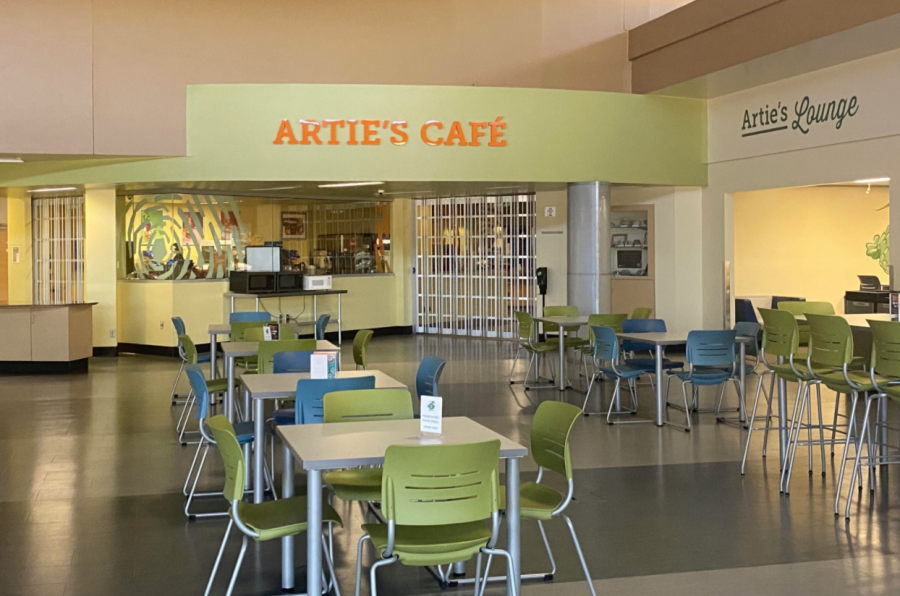
SCC's Artie's Café has new food services provider - Northeast Valley News

takanadalagi.blogspot.com

Sodexo has taken over from Chartwells to feed SCC’s student body

Scottsdale Community College has recently made changes to campus institution Artie’s Café.

A new company is providing campus culinary services to hungry students at the school’s cafeteria. The school decided to move on from its previous food provider, Chartwells, and has agreed to a new contract with Sodexo moving forward. 

Sodexo originated in France back in 1966, but has since developed into a worldwide company. It now has over 420,000 employees and provides services to over 64 different countries. 

Sodexo provides food services to elementary schools and hospitals in addition to college campuses. They also offer food catering for large gatherings. 

As for the experience at the revamped Artie’s Café, Sodexo’s Maricopa District General Manager Debra Vine recently spoke with Northeast Valley News about what students and faculty can expect.  

“Coming into it, we have tried to make (the cafeteria) a very warm and inviting atmosphere,” Vine said. 

Vine also stated that Sodexo has provided a wide variety of menu options, including vegetarian meals, smoothie bowls, and a soup bar. And the cafeteria will continue to provide many of the previous campus favorites from the grill, such as burgers with fries and quesadillas. The grill has also recently added Philly cheesesteaks to the menu. 

“We’ve got friendly staff that are always willing to help and do whatever we need to accommodate the needs, whether that be hot meals, cold meals, to-go meals, or any dietary restrictions,” Vine explained.

Artie’s Café is open Monday through Friday from 8 a.m. to 2 p.m., when students can browse and enjoy breakfast, lunch, and even dinner options.

Adblock test (Why?)


"cafe" - Google News
November 01, 2021 at 03:10PM
https://ift.tt/3nIMS3j

SCC's Artie's Café has new food services provider - Northeast Valley News
"cafe" - Google News
https://ift.tt/2FkbMR3
https://ift.tt/3c4yPxW

Cafe Napolitana to sling pizzas with new address and updated name - The Columbus Dispatch

Here Are The Top Three Scalable Technologies To Combat Food Insecurity - Forbes

'Nothing else here:' Why it's so hard for world to quit coal - Associated Press

By ANIRUDDHA GHOSAL

November 1, 2021 GMT

DHANBAD, India (AP) — Every day, Raju gets on his bicycle and unwillingly pedals the world a tiny bit closer to climate catastrophe.

Every day, he straps half a dozen sacks of coal pilfered from mines — up to 200 kilograms, or 440 pounds — to the reinforced metal frame of his bike. Driving mostly at night to avoid the police and the heat, he transports the coal 16 kilometers (10 miles) to traders who pay him $2.

Thousands of others do the same.

This has been Raju’s life since he arrived in Dhanbad, an eastern Indian city in Jharkhand state in 2016; annual floods in his home region have decimated traditional farm jobs. Coal is all he has.

This is what the United Nations climate change conference in Scotland, known as COP26, is up against.

Earth desperately needs people to stop burning coal, the biggest single source of greenhouse gases, to avoid the most catastrophic impacts of climate change — including the intense flooding that has cost agricultural jobs in India. But people rely on coal. It is the world’s biggest source of fuel for electric power and so many, desperate like Raju, depend on it for their very lives.

“The poor have nothing but sorrow ... but so many people, they’ve been saved by coal,” Raju said.

Alok Sharma, the United Kingdom’s president-designate of the conference, said in May that he hoped the conference would mark the moment where coal is left “in the past where it belongs.”

While that may be possible for some developed nations, it is not so simple for developing countries.

They argue they should be allowed the “carbon space” to grow as developed nations have, by burning cheap fuels like coal, which is used in industrial processes such as steelmaking along with electric power generation. On average, the typical American uses 12 times more electricity than the typical Indian. There are over 27 million people in India who don’t have electricity at all.

Power demand in India is expected to grow faster than anywhere in the world over the next two decades as the economy grows and ever more extreme heat increases demand for air conditioning that so much the rest of the world takes for granted.

Meeting that demand will not fall to people like Raju, but to Coal India, already the world’s largest miner, which aims to increase production to over 1 billion tons a year by 2024.

D.D. Ramanandan, the secretary at the Centre of Indian Trade Unions in Ranchi said that conversations of moving beyond coal were only taking place in Paris, Glasgow or New Delhi. They had hardly begun in India’s coal belt. “Coal has continued for 100 years. Workers believe it will continue to do so,” he said.

The consequences will be felt both globally and locally. Unless the world drastically cuts greenhouse gas emissions the planet will suffer even more extreme heat waves, erratic rainfall and destructive storms in coming years, according to the Intergovernmental Panel on Climate Change.

And a 2021 Indian government study found that Jharkhand state -- among the poorest in India and the state with the nation’s largest coal reserves -- is also the most vulnerable Indian state to climate change.

But there are roughly 300,000 people working directly with government-owned coal mines, earning fixed salaries and benefits. And there are nearly 4 million people in India whose livelihoods are directly or indirectly linked to coal, said Sandeep Pai, who studies energy security and climate change at the Center for Strategic and International Studies in Washington.

India’s coal belt is dotted by industries that need the fuel, like steel and brick making. The Indian railways, country’s largest employers, earns half their revenue by transporting coal, allowing it to subsidize passenger travel.

“Coal is an ecosystem,” Pai said.

ADVERTISEMENT

For people like Naresh Chauhan, 50 and his wife Rina Devi, 45, India’s economic slowdown resulting from the pandemic has intensified their dependence on coal.

The two have lived in a village at the edge of the Jharia coalfield in Dhanbad all their lives. Accidental fires, some of which have been blazing for decades, have charred the ground and left it spongey. Smoke hisses from cracks in the surface near their hut. Fatal sinkholes are common.

The couple earn $3 a day selling four baskets of scavenged coal to traders.

Families who’ve lived amid coal mines for generations rarely own any land they can farm and have nowhere else to go. Naresh hopes that his son would learn to drive so that he, at least, could get away. But even that may not be enough. There’s less work for the city’s existing taxi drivers. Wedding parties, who in the past reserved cars to ferry guests, have shrunk. Fewer travelers come to the city than before.

“There is just coal, stone and fire. Nothing else here.”

That could mean even harder times for the people in Dhanbad as the world eventually does turn away from coal. Pai says this is already happening as renewable energy gets cheaper and coal becomes less and less profitable.

India and other countries with coal-dependent regions have to diversify their economies and retrain workers, he said — both to protect the livelihoods of workers and to help speed the transition away from coal by offering new opportunities.

Otherwise, more will end up like Murti Devi. The 32-year-old single mother of four lost the job she had all her life when the mine she worked for closed four years ago. Nothing came of the resettlement plans promised by the coal company so she, like so many others, turned to scavenging coal. On good days, she’ll make a dollar. On other days, she relies on neighbors for help.

“If there is coal, then we live. If there isn’t any coal, then we don’t live,” she said.

___

AP journalists Shonal Ganguly and Altaf Qadri contributed to this report.

___

The Associated Press Health and Science Department receives support from the Howard Hughes Medical Institute’s Department of Science Education. The AP is solely responsible for all content.

ADVERTISEMENT

Adblock test (Why?)


"Here" - Google News
November 01, 2021 at 11:32AM
https://ift.tt/2ZF11WE

'Nothing else here:' Why it's so hard for world to quit coal - Associated Press
"Here" - Google News
https://ift.tt/39D7kKR
Shoes Man Tutorial
Pos News Update
Meme Update
Korean Entertainment News
Japan News Update

Search

Featured Post

A New Cafe, Cocktail Bar, Sports Pub, and Pickleball Destination Is Opening in Far South Austin - Eater Austin

takanadalagi.blogspot.com Two new sibling bars are opening in far south Austin sometime this year. There’s cafe and cocktail bar Drifters S...

Postingan Populer