Sign up for our PoliticsNY newsletter for the latest coverage and to stay informed about the 2021 elections in your district and across NYC
There’s a new business in Unionport which is surely unique to the area.
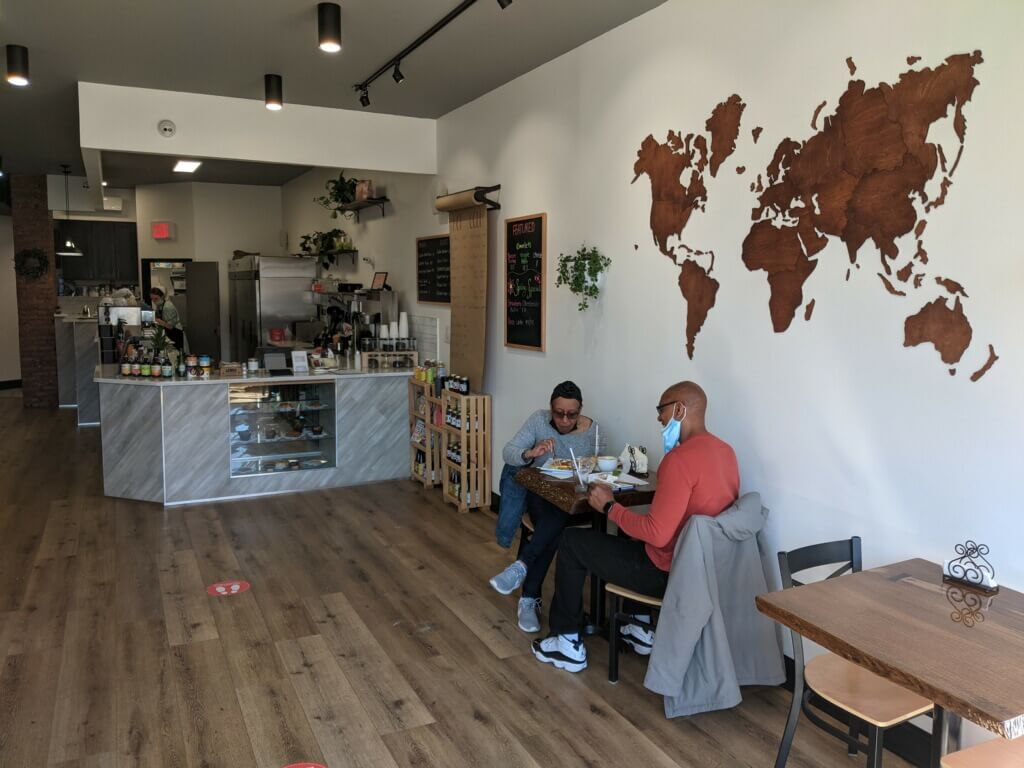
That is The Way Cafe of 1015 Castle Hill Avenue, a scrumptious boutique style eatery owned by Andy Weaver, a Lebanon, Pennsylvania Mennonite by birth.
In his own words, Weaver said that being a Mennonite is in many ways similar to being Amish – there’s just a much more friendly outlook towards technology and a tendency to engage more with society.
He and his family moved into the area in June of 2017 and opened The Way Cafe exactly three-years later in June of 2020, the first cafe they had ever owned.
Like many new businesses, it was not Weaver’s choosing to commence operations in the middle of a pandemic, he said, adding that he’s grateful to have been able to keep his doors open as business has improved since the summer months.
“I’m excited about this summer,” he said.
The purpose of opening this Bronx business was to “interact with community, share message of hope, and create a peaceful environment,” Weaver added, also noting that “good food is integral.”
So, what good food can be found at The Way Cafe?
A variety of pannis, ranging from chipotle chicken, bacon, and ranch to veggie pesto, tomato basil grilled cheese, turkey apple cheddar, to plenty more.
That’s complemented by a plethora of made to order sandwiches, salads, breakfast items, juice blends and coffees “served with a relationship and peaceful environment.”
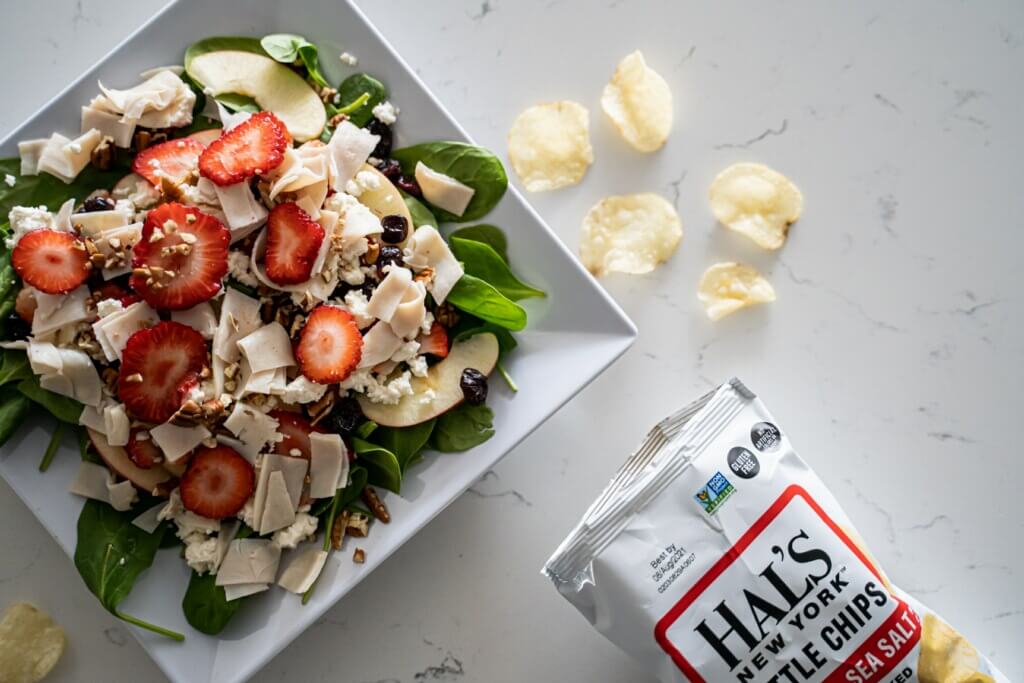
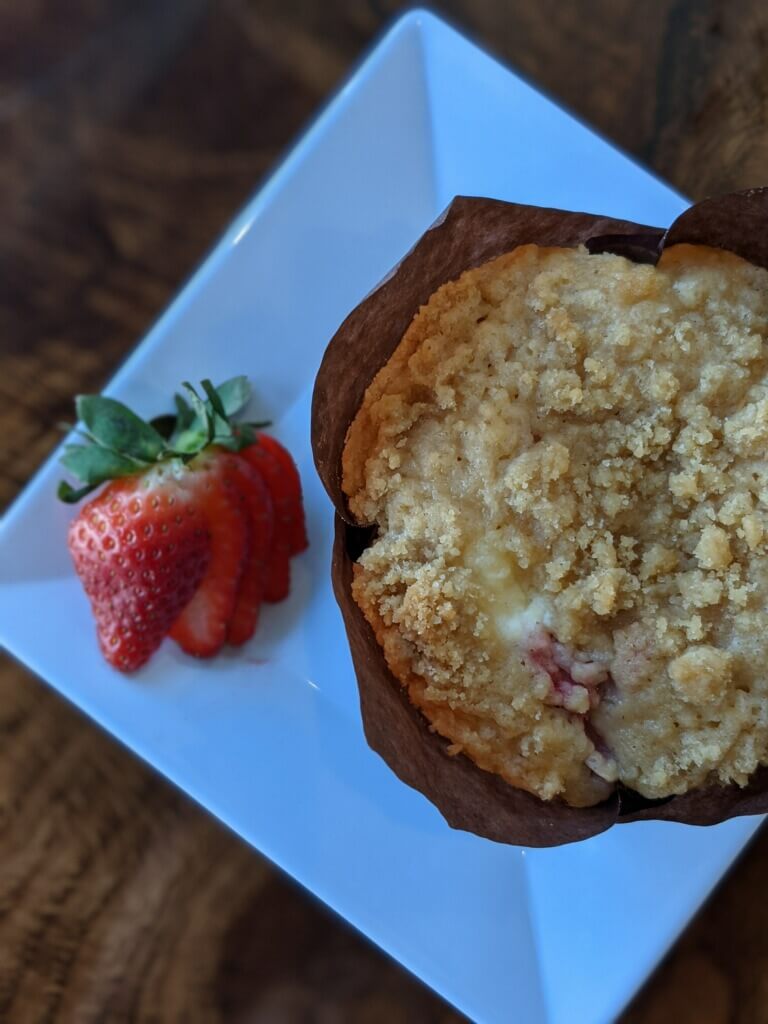
A foam engineered latte from The Way Cafe.A harvest salad from The Way Cafe.A strawberry cheesecake muffin from The Way Cafe.
Weaver said that the menus is influenced by his own background, adding that the known ‘Pennsylvania Dutch’ culinary style is not one which will be found at The Way Cafe.
“We’re here to offer good food and a good product, serve, develop relationship and offer hope and share the good news of Jesus,” Weaver said.
The Way Cafe is open Tuesday through Saturday from 7 a.m. to 4 p.m.
Dan Aubrey contributed to the reporting for this story
Share My Meals, a Princeton-based nonprofit started last year to fight food insecurity, has expanded into Lawrence Township. Last month, the organization added Fedora Cafe as the fifth restaurant in its network of food suppliers.
Ilkay Kisemenli of Fedora Cafe (right) gives food to a Share My Meals client.
“Every day we see more people needing food. We can’t sit there and do nothing,” said Ishara Wijesuriya, owner of Fedora Cafe, which is located on Main Street in Lawrenceville. “We have decided to work with Share My Meals to help them extend their operations to our community.”
Fedora Cafe will prepare 450 meals per week to be delivered on Mondays, Wednesdays and Fridays to an estimated 20 families..
“We could not be more thankful for the partnership with Fedora Cafe,” said Isabelle Lambotte, Share My Meals president.
She said SMM has provided more than 50,000 meals to people suffering from food insecurity since the organization was founded in January 2020.
“The need in Lawrenceville is mirroring what we see in Princeton,” she said. “Hunger existed in the community before COVID and has been exacerbated during the pandemic.”
According to Lambotte, members of the Lawrence Township community reached out to SMM at the end of last year to help several families in town. The organization began to address the issue with the support of Princeton restaurants, but the extent of the need resulted in having to find a partner in Lawrence Township.
Wijesuriya, who previously worked in finance for about 18 years, said she negotiated the purchase of the restaurant last year before the pandemic hit, and made the decision to go ahead with the deal.
“One of the reasons is that I wanted to make sure that the restaurant stays within Lawrenceville,” she said. “I am from this community, so it was kind of important.”
She added that going into the restaurant business in the midst of a pandemic was “nerve wracking,” and she was unsure whether she was making the right decision. But at the same time, I strongly felt that this is something I should go for regardless.”
Wijesuriya said that not being able to run the restaurant at full capacity has made business difficult, and like most restaurants during the pandemic, she’s had to rely on take out and delivery orders.
“I just take it one day at a time and think positive,” she said.
As for partnering with SMM, Wijesuriya said that one of the reasons she purchased the restaurant was to be able to help give back to the community.
“I felt that it’s a good organization. At the same time I always felt that I’m quite privileged. I’ve always had food to eat and never had to worry about it. But I know there are loads of people out there who don’t have the same privileges as I do. This is a good opportunity to use what I have in this restaurant as a platform to help other people.”
Macarena de Torres, who is responsible for supply chain operations for Share My Meals, said they were looking for family-run restaurants in the downtown Lawrenceville area that were open seven days a week.
“We didn’t want a franchise,” de Tiorres said. “We wanted to have someone who was here and working with all the people in Lawrenceville.”
She said the plan is for Fedora Cafe to serve people in Lawrence Township, Trenton and potentially Ewing Township.
* * *
SMM’s original mission was to provide a bridge between individuals and families needing food and food suppliers (corporations, universities, and schools) with excess to share, fighting food insecurity while curbing the environmental impact of food waste, Lambotte said.
After the lockdown, the organization had to adapt and expand its operations and launched its COVID-19 Program. While the original meal suppliers temporarily closed their doors, four Princeton restaurants agreed to prepare meals at the cost of goods.
This allowed the restaurants to keep some staff members employed while also supporting the community. Thanks to this collaboration and the support of generous people (donors and volunteers), Share My Meals has distributed more than 50k meals since being established in January of 2020.
“We are very food wasteful, and there is food insecurity, and we wanted to fill the gap by distributing the food surplus to people in need,” Lambotte said about the organization’s core focus.
To address that need she and others developed a “Waste Watchers Program” based on the reality that restaurants, foods service companies, school and corporate cafeterias, and caterers generally prepare excess food to satisfy customers and clients.
However, that practice also leads to healthy and nutritious meals being thrown away — unless there was a simple mechanism food providers could use that would take the food away and distribute it.
“We began in January (2020) with one of the eating clubs at the university, Tiger Inn. We were receiving 100 meals and giving them to families in Princeton.”
She said the organization was able to identify individuals and families in need through SMM vice president Liliana Morenilla, Princeton Public Schools community outreach coordinator and founder of Princeton Mobile Food Pantry.
Soon 15 families had been identified and registered with SMM to receive meals once every two or three days.
Lambotte said the project was gaining steam and more involvement, but the state’s pandemic-related closures of businesses, restaurants and eating clubs halted operations and created a gap in providing food.
That in turn resulted in business closures, unemployment and more individuals facing economic insecurity.
“I started talking with the restaurants to see if they would continue in the months ahead, and we would cover the cost of food and pay staff members,” Lambotte said.
With the participating restaurants and farms wanting to help, Lambotte said, they came up with an approach where SMM pays the food provider a fixed price, and they prepare and pack the meals that volunteers pick up and deliver.
She said the 40 individuals who help in various ways come from word of mouth and from looking at the organization’s website.
“It is not just delivering, there are other options. It could be marketing, fundraising,” she said.
After an individual fills out the form on the SMM website, coordinators organize a meeting with the applicant and conduct a “preliminary group session where we talk to them and understand their motivation. Some will see it as not for them, but 99 percent go to the next step,” Lambotte said.
She said there are a few essential volunteer requirements: a car and car insurance or some other means of transportation to deliver food if needed. SMM provides additional insurance to support volunteers and provides insulated bags for food delivery.
Regarding her background and interest in the creating such a project, the Belgium-born daughter of a university researcher father and lab assistant mother, said, “I am a pharmacist and have been working many years, moving from one country to another. I’ve been in Princeton since 2006 (when her husband took a pharmaceutical job in the area). I had been working with Liliana at the Food Pantry every Wednesday morning and giving fresh produce provided by Mercer Street Friends.”
After seeing more people waiting for less available food, the mother of two said she felt a need to do something to help.
She also saw food going to waste everywhere from Princeton University to even her own home. “We buy more than we need, and when we don’t use what we bought we discard it.”
She said she then started to look for a model in order to begin addressing the situation.
“It was not easy to start,” she said, pointing out that businesses supplying meals to community members is “not their main issue.” Yet she and other volunteers developed an approach. “If we provide (the food source) with the trays, and it wasn’t too much work to pack the food. And if we supplied the transportation, it would help the company and corporations and it would help the community.”
She said adding tax-deductible donations through the nonprofit organization that activated at the start of the year and helping the business show a connection to the greater community “made sense for everyone.”
And while things were in place for the project to grow before the pandemic, Lambotte said, “That is what we’re going to do when the corporations are starting to open. It was our main objective, and we’re waiting to start. Meanwhile, we have gained credibility, and we have a better idea of how to manage 100 families rather than 15 and we are more aware than six months ago.”
She said her approach to making connections and finding people to help develop the project was simple. “You know Princeton is a small town. And I started to ask people I knew. It was mainly word of mouth. The more I talked with people, the more people I saw excited. I reached out to people at Princeton University, people in corporations, and on LinkedIn.”
An advertisement on an area French community chat site and her familiarity with other foreign-born area residents, such as the Spanish born Morenilla, resulted in an all-European founding board that is now adding two native-born Americans.
Looking back at the organization’s first year, Lambotte said, “It was supposed to be a small activity, and all of a sudden there was larger visibility. Originally we started thinking of a budget of $50,000.” They ended up raising $300,000” — including support from the PrincetonArea Community Foundation, Bristol-Myers Squibb Foundation, Sodexo, Blackrock, and the Merancas Foundation, which provided a matching grant.
In addition to Tiger Inn and The Meeting House, other participating area restaurants include Bagel Nook, Kristine’s Princeton, La Mezzaluna, Terra Momo, and Trattoria Procaccini. Area farms and markets include Cherry Grove Farm, Honey Brook Organic Farm, Skillman Farms, and Pennsylvania Dutch Market. The Hun and Princeton Day schools also participate.
About the coordinating effort, Lambotte said, “We are seven board members who are working 70 hours a week. We are very happy to be volunteers, but we found we have been growing in the future to have some support and some staff.”
She said the group actively reaching out to local volunteers wanting to join the nonprofit in the Lawrenceville areas to fight hunger and reduce food waste. People interested in making a positive impact on their local community can go to sharemymeals.org.
“We are trying to get people in the community involved with problems. Share My Meals is more than food,” said Lambotte.
"cafe" - Google News
March 31, 2021 at 09:05PM
https://ift.tt/3sElk0j
Fedora Cafe joins forces with Share My Meals to fight food insecurity - Community News
"cafe" - Google News
https://ift.tt/2FkbMR3
https://ift.tt/3c4yPxW
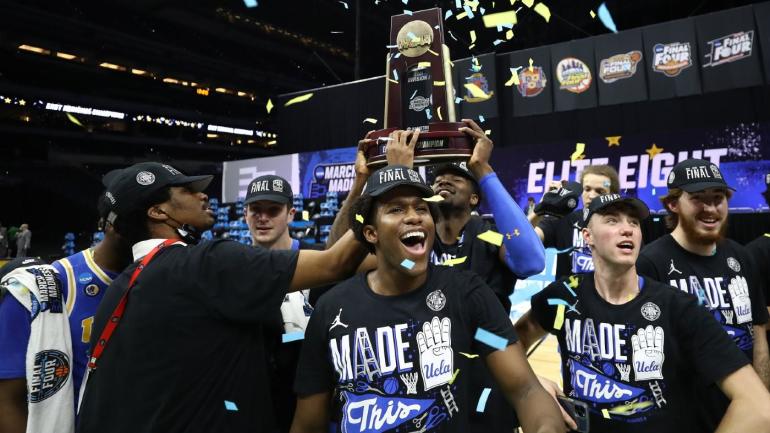
After a long and tumultuous road to travel, we have arrived. The Final Four of the 2021 NCAA Tournament is set. Despite many setbacks and strict protocols to enforce as the world still deals with the COVID-19 pandemic, just four teams are left standing to play for the first national championship in two years. We the field officially set for Saturday, we're going to take a closer look at the remaining teams.
For as chaos-riddled as the first and second weekend of the NCAA Tournament was, the four left in the field -- outside of No. 11 seed UCLA -- were those largely expected to be in the hunt to the end. Two of the four teams are No. 1 seeds (both of which were the top two teams ranked by the committee), and the final team -- No. 2 seed Houston -- was the projected Midwest Regional champion by default after No. 1 seed Illinois ducked out in the second round.
Gonzaga, UCLA, Baylor and Houston are in the Final Four. Listen to the newest Eye on College Basketball episode to prepare for the final weekend of the season.
So today, we celebrate one of the final checkpoints of the NCAA Tournament with a closer examination of each of the four still standing. Here's how they got here, who got them here and the odds that they'll go all the way. They have been listed below in the order they were ranked by the selection committee for the tournament.
Coach: Mark Few has been Gonzaga's coach since 1999 and built the Bulldogs into a west coast bully. They have made the NCAA Tournament each season he's been in charge and accrued a 35-22 record in the NCAA Tournament during that span.
Key player: Sharpshooting Corey Kispert is a player of the year finalist but it's Drew Timme and his Fu Manchu who get the nod here. Timme is having a monstrous NCAA Tournament averaging 21.2 points and 7.5 rebounds in four games and is coming off a 23 point, five rebound performance against potential No. 1 pick and 7-footer Evan Mobley.
Key stat: Gonzaga has won an NCAA Division I record 27 consecutive games by double-digits.
Scouting report: Behind the most lethal 2-point scoring offense in college basketball history, the Zags have talent and depth in ways few title contenders in year's past can rightfully boast of. That charge is led by lottery talents Corey Kispert, a walking flamethrower, and Jalen Suggs, the most competitive freshman in college hoops. But they also have size too in Timme and Anton Watson along with an embarrassment of riches in the backcourt between Joel Ayayi and Andrew Nembhard.
Coach: Scott Drew has been the Baylor coach since 2003, where he's amassed a 370-215 overall record. He's taken the Bears to nine NCAA Tournaments where they are 15-8 under his watch that includes three Elite Eight appearances.
Key player: Davion Mitchell is the third-leading scorer for Baylor but the shooting star that helped key its Elite Eight win over Arkansas, which prompted his coach to call him a "nightmare" and tone-setter on defense. He's averaging 13.5 points, 4.8 assists and 2.0 steals per game in the NCAA Tournament.
Key stat: Baylor leads the country this season in team 3-point shooting percentage at 41.1%.
Scouting report: Baylor opened its season 17-0 before being forced into a three-week COVID pause that threw the team off its groove. It returned with a close Big 12 loss to the conference's last-place team, Iowa State, before taking its first loss of the season. But the Bears are back on the wagon and riding strong as ever in the tournament, with Jared Butler, Davion Mitchell and Macio Teague headlining the team's elite guard-heavy roster. They boast the No. 3 offense in adjusted efficiency according to KenPom data and can blow teams away with offensive firepower behind their magnificent 3-point shooting.
(2) Houston Cougars
Midwest Regional Champion
Record: 28-3
Final Four appearances: 1967, 1968, 1982, 1983, 1984, 2021
Coach: Kelvin Sampson took over the Houston program in 2014 and had them as a tournament team by year four. He's 167-63 in seven seasons with three NCAA Tournament appearances. In those appearances, the Cougars are 7-3 but had only advanced past the first weekend once before this season.
Key player: Former five-star recruit and Kansas transfer Quentin Grimes is the driving force behind Houston's top-10 offense. Grimes leads the team in scoring this season and is averaging 18.0 points per game during Houston's Final Four run.
Key stat: Houston is the first team in NCAA Tournament to advance to the Final Four beating only double-digit seeds.
Scouting report: The Cougars -- some pun intended -- are mauling teams on the offensive glass. They rank second in offensive rebounding rate according to KenPom data on the season. That has given them second-chance opportunities and extra looks to help widen the margin for error. Take its game against Oregon State in the Elite Eight for example: Houston shot a worse percentage from the field and from 3-point range in the game, but it got 15 more total shots off than the Beavers because it brought down a whopping 19 offensive boards which it converted to 19 second-chance points. The scoring action flows through Grimes, Marcus Sasser and DeJon Jarreau, but Jarreau, Justin Gorham and Fabian White are relentless difference-makers on the glass.
NCAA Tournament Path: First Four -- Def. No. 11 seed Michigan State 86-80 (OT); First round -- Def. No. 6 seed BYU 73-62; Second round -- Def. No. 14 seed Abilene Christian 67-47; Sweet 16 -- Def. No. 2 seed Alabama 88-78 (OT); Elite Eight -- Def. No. 1 seed Michigan 51-59.
Coach: After a 13-season run with Cincinnati, UCLA in 2019 plucked Mick Cronin from the Bearcats to take over the Bruins. Last season they finished second in the Pac-12 race before COVID halted the postseason, going 19-12. This season they're 22-9 and in the Final Four for the first time since 2008.
Key player: Kentucky transfer Johnny Juzang is the name to know. UCLA has a ton of fun players who can put up big numbers, but he's been the Bruins' most reliable offensive weapon all tournament. On a bum ankle, he scored 28 points against Michigan and is averaging 21.6 points per game during the tournament.
Key stat: UCLA is the second team in NCAA Tournament history to go from the "First Four" to the Final Four, joining VCU, which did so in 2011.
Scouting report: UCLA's goal is to slow you down and drag you into a fight, where it can then lull you into a battle with skill. Five different players are averaging at least 10 points per game on the season, so this isn't a one-man show with Juzang. It is guard-tilted, however, with Juzang, Jules Bernard, Jaime Jaquez Jr. and Tyger Campbell comprising most of the offensive production.
CHICO — A well-known Chico breakfast and brunch restaurant stayed closed for many months in the pandemic and began 2021 with a new look and vision.
Cafe Coda, which opened in Chico in 2006, shut down for months when the statewide COVID-19 lockdown came down and “changed the course of everything,” owner Eric Danielli said.
“It didn’t feel real even at that moment,” he said.
With so little known about the virus at the time, “I just couldn’t guarantee anybody’s safety.” So he chose to shut down, in part to protect staff and cut costs, temporarily.
“But it just never improved,” Danielli said. “The situation kept deteriorating.”
Cafe Coda owner Eric Danielli sits Tuesday in the business’ new deck and outdoor seating area in Chico. (Natalie Hanson — Enterprise-Record)
Two employees were also put out of commission by other sudden life events, and others moved away.
As time went on, Danielli would check in with staff at different points about how they felt operating, knowing they wanted to be fully compliant with new state guidelines for operation during the pandemic.
“And it was pretty unanimous that nobody was willing to go to work, in this kind of (food service) work at the moment,” he said. Without a federal stimulus payment, they could not afford to reopen for months.
“At a certain point, we started to get funding,” he said.
This enabled thinking of a pivot for the business to be able to operate in a new way permanently.
Danielli said he was glad they did not reopen with outdoor dining “parklets” during fire season, as the staff avoided smoke from the North Complex fires in September.
“It felt like the right thing, and it still feels like, (I’m) grateful that we just didn’t take part in any of it,” he added.
When funding was available, Danielli began to consider where to place an outdoor seating area. Given the traffic conditions of Humboldt Avenue, he considered building behind the building and began to negotiate with the property next door to use part of their land to build an outdoor seating area and deck.
So through September and October, he got approval for this deck and along with a friend got it built.
Cafe Coda finally reopened in 2021 with a newly constructed deck and outdoor seating area, seen Tuesday in Chico. (Natalie Hanson — Enterprise-Record
Most difficult to determine before reopening, however, was feasibility — determining demand and being able to staff and cook for that demand.
“I need to know what’s happening tomorrow,” he said. “And if you don’t, it’s just a disaster because if you think it’s going to be busy, it ends up being slow, then you have a lot of staff. If you think it’s going to be slow, you don’t have enough staff.”
So Danielli chose to reopen in a very limited mode at a very “bleak” point in January to ensure growth. Cafe Coda began offering only burritos to go, to be picked up at a kiosk outside the building.
The business met with overwhelming demand immediately. Soon, Danielli expanded the menu again, and redesigned hours to Wednesday through Sunday 8 a.m. to 1 p.m., eventually allowing outdoor dining on the new deck.
“And that worked,” he said. “We haven’t had any coronavirus scares where we’ve had to shut down or isolate.”
Having all staff on the same page about compliance like mask wearing and getting vaccinated, with mutual trust, is “huge,” he said.
“We trust each other to show up and be a part of this team and make it a positive experience. We trust our customers to adhere to some sort of protocol and they trust us to do the same. If that trust is violated, things get hard really quick.”
Danielli said the hardest part is staffing as he is struggling to find more employees while experiencing “a constant state of growth.”
Many local restaurants are also hiring now, he said, and most staff have been locals. He said he sometimes feels the weight of carefully gauging staffing levels after three months.
Soon, a cooperative food truck and beer garden-style space will be designed behind the restaurant, near the outdoor deck. Danielli said he is grateful for the location’s amount of land to work with food trucks such as Panini Machini.
With the new concept in motion, “I could very easily see doing breakfast all day and doing live music again,” he said. “That’s very much my goal.”
Social media support from loyal customers throughout the year has driven his motivation to keep going and reopen, Danielli added.
"cafe" - Google News
March 31, 2021 at 06:25PM
https://ift.tt/3fuO07W
Cafe Coda makes comeback with new outdoor look, cooperative concept - Chico Enterprise-Record
"cafe" - Google News
https://ift.tt/2FkbMR3
https://ift.tt/3c4yPxW